

A fire changes everything in minutes. One moment you’re living your routine, the next you’re staring at smoke, damage, and uncertainty. This is where a fire insurance adjuster enters the picture and whether your claim works in your favor or against you often depends on how well you understand their role.
Let’s be direct. Not all adjusters are on your side. And if you don’t take control early, you could leave serious money on the table. This guide walks you through exactly how a fire insurance adjuster works, what to expect, and how to position yourself for the best possible outcome.
What Is a Fire Insurance Adjuster?
A fire insurance adjuster is the person responsible for evaluating your fire damage and determining how much your insurance company will pay. Simple definition. Big impact.
There are three main types you should know:
Types of Adjusters
- Insurance Company Adjuster
- Works directly for your insurance provider
- Goal: Protect the company’s financial interest
- Independent Adjuster
- Contracted by insurance companies
- Handles claims during high-volume events
- Public Adjuster
- Works for you, the policyholder
- Focused on maximizing your claim payout
That last one matters. A lot.
Because the person assessing your loss is also influencing your financial recovery. And that creates a gap one you need to understand and manage.
The Role of a Fire Insurance Adjuster in Your Claim
At first glance, it looks straightforward. Inspect damage. Write a report. Issue a payout. But the reality is more layered.
A fire insurance adjuster will:
- Inspect the property and document visible damage
- Evaluate structural loss and safety concerns
- Estimate repair or rebuilding costs
- Assess damaged personal belongings
- Interpret your insurance policy coverage
- Prepare a settlement estimate
Here’s the part most homeowners miss:
Every one of those steps involves judgment.
And judgment can vary.
In fact, evaluating loss after a traumatic event often reflects a kind of real-world decision-making process similar to Phenomenology where perception and interpretation influence outcomes more than people expect.
The Fire Insurance Claim Process Explained
Step 1 – Reporting the Fire
Act fast. Call your insurance company immediately.
Then:
- Secure the property if safe to do so
- Take photos and videos
- Start a damage log
Documentation starts here not later.
Step 2 – Initial Inspection
This is your first interaction with a fire insurance adjuster.
They will:
- Walk through the property
- Take notes and photos
- Ask questions about the incident
Be present. Always.
If you’re not there, details can be missed. And missed details don’t get paid.
Step 3 – Damage Assessment & Valuation

This is where numbers are assigned. And numbers matter. Common valuation methods include:
| Method | What It Means | Impact |
| Replacement Cost | Cost to replace items new | Higher payout |
| Actual Cash Value | Depreciated value | Lower payout |
If your policy includes replacement cost but the adjuster applies depreciation incorrectly you lose money. It happens more often than you think.
Step 4 – Settlement Offer
You’ll receive an estimate. It may look official. Detailed. Final. It’s not.
Initial offers are often:
- Incomplete
- Conservative
- Missing hidden damages
Treat it as a starting point, not the finish line.
Step 5 – Negotiation & Final Payout
This is where outcomes change.
Negotiation can:
- Increase your payout significantly
- Correct missed damages
- Clarify coverage disputes
If you don’t push back, the process ends quickly. If you do, it can shift in your favor.
Challenges Homeowners Face with Fire Insurance Adjusters
Let’s be honest. This process is not designed to be easy.
Here are the most common challenges:
- Underestimated damage
- Delays
- Policy confusion
- Low initial offers
- Emotional fatigue
It’s a tough combination. And that’s exactly why preparation matters.
Why Hiring a Public Adjuster Makes a Difference
This is where things shift. A public adjuster works for you not the insurance company. That changes the dynamic immediately.
What a Public Adjuster Does
- Conducts independent damage assessments
- Prepares detailed documentation
- Challenges low estimates
- Negotiates directly with the insurer
They understand how a fire insurance adjuster builds a case and how to counter it effectively.
Fire Damage Assessment: What Gets Included
Fire damage isn’t just what you can see.
It goes deeper.
Covered Damage Types
- Structural damage
- Smoke and soot damage
- Water damage
- Personal belongings
- Hidden damage
If it’s not documented, it’s not included. That’s the rule.
Common Mistakes to Avoid After a Fire
- Accepting the first offer without review
- Failing to document everything
- Throwing away damaged items too early
- Not understanding policy limits
- Handling the claim alone
A fire insurance claim is a negotiation. Treat it like one.
How to Work Effectively with a Fire Insurance Adjuster
- Be present during inspections
- Keep a claim journal
- Request written reports
- Ask clear questions
- Stay organized
Consistency beats confusion.
Local Insight: Fire Claims in Lewisville, TX
Local factors matter.
- Climate conditions
- Building costs
- Labor rates
- Regional risks
A fire insurance adjuster working without local insight may miss these nuances costing you in the long run.
Real-World Scenario: A Fire Claim Turnaround
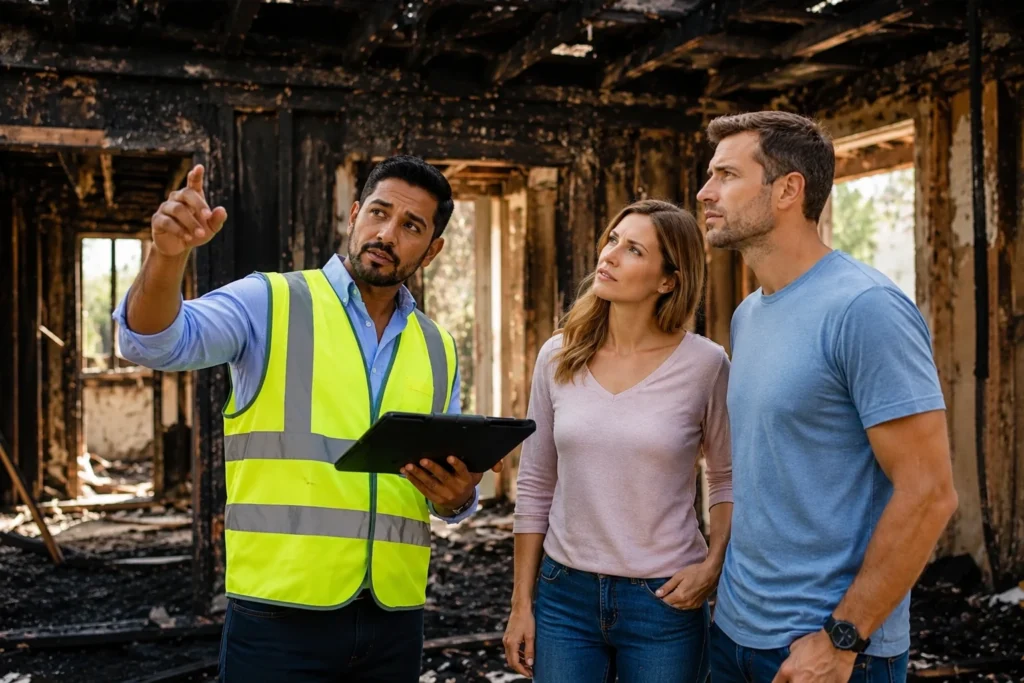
Initial offer: $38,000.
Final settlement: $92,000.
Same property. Same fire. Different approach. A public adjuster identified hidden damage, challenged estimates, and negotiated effectively. That’s the difference expertise makes.
When Should You Call a Fire Insurance Adjuster?
- Immediately after a fire
- When damage is significant
- If your claim feels undervalued
- Before accepting a settlement
Timing can influence everything.
The Short Answer: Do You Need a Fire Insurance Adjuster?
If the claim is complex, high-value, or disputed yes. A fire insurance adjuster (especially a public one) can protect your financial outcome and reduce stress.
Final Thoughts
Fire recovery is more than repairs. It’s a process of rebuilding financially and emotionally. Understanding how a fire insurance adjuster works gives you leverage. It puts you in a stronger position. And when everything feels uncertain, that advantage matters. Don’t rush. Don’t settle early. And don’t navigate it alone if you don’t have to.
FAQs
A fire insurance adjuster evaluates property damage, reviews your policy, and determines how much the insurance company will pay for your claim.
Not always company and independent adjusters work for the insurer, while a public adjuster represents your interests.
It can take anywhere from a few weeks to several months depending on the severity of damage and complexity of the claim.
Yes, you can negotiate the settlement, especially if you believe the estimate is too low or missing damages.
A public adjuster works for you to maximize your claim, while an insurance adjuster works for the insurance company.
No, initial offers are often lower than what you may be entitled to, so it’s important to review and negotiate if needed.
Most policies cover structural damage, smoke damage, water damage from firefighting, and personal belongings.
You should consider hiring one immediately after a fire or if your claim is large, complex, or undervalued.
Ensure safety first, then document all damage with photos and contact your insurance company to start the claim process.
Keep detailed records, document everything thoroughly, and consider working with a public adjuster to negotiate a fair settlement.