
Hailstorms move fast. One moment the sky is calm. Minutes later, shingles are bruised, gutters are dented, water is entering attics, and homeowners are standing in their driveway wondering what just happened. That confusion is exactly why understanding How to Document Hail Damage for an Insurance Claim matters before hiring contractors, roofers, or adjusters. Good documentation protects your position from the very beginning. Insurance companies do not pay based on frustration. They pay based on evidence. That distinction changes everything. Strong documentation can help support roof replacement arguments, identify hidden damage, reduce claim delays, and prevent underpayment disputes later. Weak documentation often creates gaps insurers can challenge. And once evidence disappears, recovering it becomes difficult.
In storm-prone areas like Lewisville, homeowners frequently deal with hail events that create both visible and hidden roofing damage. Some issues appear immediately. Others develop weeks later after moisture intrusion begins spreading beneath roofing materials. The homeowners who usually navigate claims more successfully are not necessarily construction experts. They are organized. They gather evidence early. They document carefully. They understand the process before the insurance inspection begins. That preparation creates leverage.
Why Hail Damage Documentation Matters So Much
Insurance Companies Pay Based on Evidence
A claims adjuster was not present during the storm. They rely on inspection findings, photographs, reports, timelines, and supporting documentation to determine what happened. That means your documentation becomes the story of the claim.
If the evidence is incomplete, the carrier may argue:
- Damage was pre-existing
- Wear and tear caused the problem
- The roof is repairable instead of replaceable
- Interior damage came from maintenance issues
- The storm was not severe enough to justify payment
Those disputes happen constantly. Detailed documentation helps eliminate uncertainty. It creates a clearer connection between the hailstorm and the resulting damage.
Small Documentation Mistakes Can Reduce Payouts
Minor errors can become expensive later.
For example:
| Documentation Mistake | Potential Claim Impact |
| No date-stamped photos | Storm timing disputes |
| Missing collateral damage photos | Reduced storm verification |
| Limited roof images | Incomplete scope |
| No interior moisture photos | Water damage exclusions |
| Poor organization | Delays and confusion |
Many homeowners assume the insurance company will fully document everything during inspection. Sometimes they do. Sometimes they do not. That is why independent documentation matters so much.
Why Pre-Hire Research Matters Before Filing a Claim
The hours immediately after a hailstorm are chaotic. Roofers begin canvassing neighborhoods. People knock on doors. Homeowners panic. Everyone suddenly claims to be an expert.
That environment leads to rushed decisions. Learning How to Document Hail Damage for an Insurance Claim before signing agreements or filing paperwork helps homeowners stay in control. You can ask better questions. You can evaluate inspection quality. You can recognize incomplete assessments. Knowledge reduces pressure.
What Hail Damage Actually Looks Like
Not all hail damage looks dramatic from the ground. In fact, many serious claims involve roofing systems that initially appeared “mostly fine.” That is misleading.
Asphalt Shingle Damage
Asphalt shingles often show:
- Granule loss
- Circular bruising
- Soft impact points
- Exposed fiberglass matting
- Cracked seal strips
Some impacts weaken shingles without creating obvious holes immediately. Over time, UV exposure and water intrusion worsen those damaged areas. A roof may continue functioning temporarily while still qualifying for replacement consideration.
Metal Roofing Damage
Metal systems respond differently.
Common signs include:
- Dents
- Coating fractures
- Seam separation
- Fastener displacement
Cosmetic versus functional damage becomes a major discussion during metal roof claims. Documentation quality often determines how that conversation unfolds.
Tile and Specialty Roof Damage
Tile roofs present another challenge entirely.
Damage may include:
- Hairline fractures
- Corner breaks
- Underlayment punctures
- Hidden movement beneath tiles
Some cracked tiles remain partially intact after impact, making damage harder to identify without close inspection.
Collateral Damage Insurance Adjusters Look For
Collateral evidence strengthens storm verification dramatically.
Important areas include:
- Gutters
- Downspouts
- Window screens
- HVAC fins
- Fences
- Soft metals
When multiple components show consistent impact patterns, the claim becomes easier to support. That consistency matters.
The First Steps to Take After a Hailstorm
Prioritize Safety First
Never climb onto a wet or unstable roof immediately after a storm. Safety comes first.
Watch for:
- Downed power lines
- Broken tree limbs
- Structural instability
- Slippery surfaces
- Active leaks near electrical systems
No insurance claim is worth a serious injury.
Document Conditions Immediately
Time matters after hail events because evidence changes quickly.
Start documenting:
- Date of storm
- Approximate storm time
- Hail size estimates
- Wind conditions
- Nearby property damage
- Water intrusion locations
Even smartphone notes help establish timelines later.
Preserve Temporary Evidence Before It Disappears
Hail melts. Wind removes debris. Water stains spread. Photograph things quickly.
Useful evidence may include:
- Hail accumulation
- Broken branches
- Shingle fragments
- Fallen flashing
- Wet insulation
- Ceiling stains
- Exterior dents
Early photos often become extremely valuable later during disputes.
How to Take Proper Photos for a Hail Damage Claim
This is where many homeowners unintentionally weaken their claims. A few random phone photos are usually not enough. Systematic documentation creates stronger evidence.
Start With Wide-Angle Exterior Photos
Begin by capturing the entire property.
Photograph:
- Front elevation
- Rear elevation
- All roof slopes
- Detached structures
- Fence lines
- Driveways
- Gutters
Wide shots establish context. They show overall storm exposure and property condition.
Capture Mid-Range Damage Photos
Next, move closer.
Focus on:
- Damaged roof sections
- Impact clusters
- Dented gutters
- Torn shingles
- Damaged flashing
Mid-range photos help connect the overall structure to specific damage zones.
Take Close-Up Impact Photos
Now document the actual impacts.
Good close-up photos show:
- Circular bruising
- Granule displacement
- Cracks
- Dents
- Fractures
- Material separation
Lighting angle matters tremendously here. Sometimes damage becomes visible only when sunlight hits at certain angles.
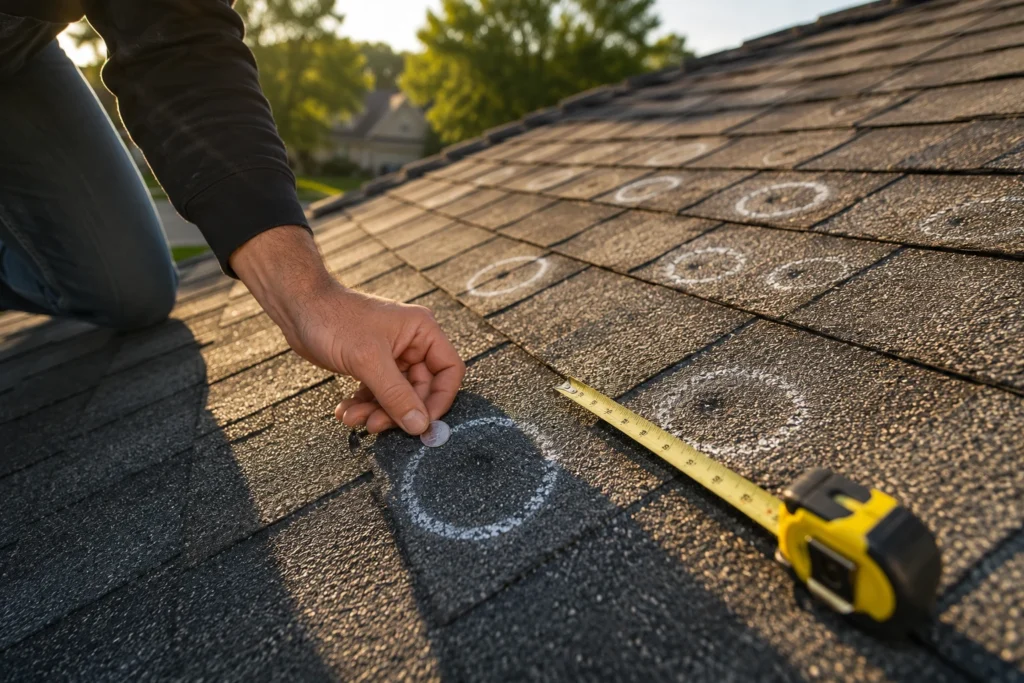
Use Reference Objects for Scale
Scale helps demonstrate impact severity.
Useful reference items include:
- Coins
- Tape measures
- Chalk circles
- Gloves
- Markers
Without scale references, some damage photos lose context.
Why Lighting and Timing Matter
Morning and late afternoon lighting often reveals damage more clearly than midday sunlight. Shadows expose texture changes. Bright overhead lighting can flatten images and hide impact patterns completely. Experienced inspectors frequently revisit roofs at different times of day because lighting changes visibility dramatically.
Creating a Complete Hail Damage Documentation File
Good documentation is not just photos. It is organization. The strongest claims usually have clean, chronological records.
Build a Storm Timeline
Create a basic timeline including:
| Event | Date |
| Storm occurrence | Day 1 |
| Initial photos | Day 1 |
| Contractor inspection | Day 3 |
| Insurance inspection | Day 10 |
| Estimate received | Day 15 |
| Supplement filed | Day 30 |
Simple organization reduces confusion later.
Save All Inspection Reports
Do not rely on memory alone.
Keep copies of:
- Roofing contractor reports
- Public adjuster inspections
- Engineer findings
- Moisture readings
- Drone images
- Thermal scans
Every report adds supporting evidence.
Organize Communication Records
Claims become messy when communication disappears.
Save:
- Emails
- Claim numbers
- Voicemails
- Inspection summaries
- Text messages
- Adjuster names
- Phone call notes
That documentation protects homeowners during disputes over what was discussed or approved.
Keep Copies of All Estimates
Estimate comparisons matter.
Preserve:
- Insurance scope sheets
- Contractor estimates
- Supplemental estimates
- Code upgrade requests
- Material pricing breakdowns
Differences between estimates often reveal missing claim scope.
Why Roof Inspections Often Miss Damage Initially
Many homeowners assume one inspection tells the entire story. That is rarely true.
Ground-Level Inspections Miss Critical Issues
Some adjusters perform limited evaluations from the ground or ladder edge. That creates problems. Important issues may remain hidden, including:
- Creased shingles
- Lifted seal strips
- Underlayment damage
- Decking deterioration
- Flashing separation
A roof can appear repairable from one angle while showing widespread functional damage up close.
Some Damage Appears During Tear-Off
This is extremely common. Once roofing materials are removed, contractors sometimes discover:
- Rotten decking
- Wet insulation
- Ventilation damage
- Fastener pull-through
- Hidden moisture migration
Those discoveries often lead to supplemental claim requests.
Why Supplemental Claims Become Necessary
Supplements are not automatically signs of fraud or inflated pricing. They often reflect newly discovered conditions. Common supplement triggers include:
- Code compliance requirements
- Additional material layers
- Ice and water shield upgrades
- Flashing replacement
- Decking repairs
- Pricing discrepancies
Experienced claim professionals understand this process thoroughly.
Common Mistakes Homeowners Make During Hail Claims
Waiting Too Long to Document Damage
This is probably the biggest mistake. Evidence deteriorates quickly. Rain, wind, sunlight, and repairs gradually erase storm indicators. Even a few weeks can change claim visibility dramatically.
Throwing Away Damaged Materials
Do not immediately discard damaged components. Preserve samples when possible, including:
- Broken shingles
- Damaged flashing
- Dented vents
- Cracked tiles
Physical evidence strengthens claims.
Relying Only on Insurance Company Photos
Insurance inspections matter. But independent documentation still helps protect your position. Homeowners should maintain their own records regardless of carrier findings. That creates accountability.
Failing to Document Interior Damage
Roof claims are not only exterior claims.
Document:
- Ceiling stains
- Peeling paint
- Wet drywall
- Attic moisture
- Mold development
- Warped trim
Interior evidence often supports roof leak timelines.
Posting Too Much on Social Media
This surprises people. Public posts showing statements like “the roof seems fine now” or “damage isn’t too bad” can complicate disputes later. Be careful about casual online comments during active claims.
How Contractors and Public Adjusters Help Document Claims
The Difference Between Contractors and Public Adjusters
Contractors focus primarily on repairs and replacement scope. Public adjusters represent policyholders during negotiations. The roles overlap sometimes, but they are different professions. Understanding that distinction matters during pre-hire research.
What a Thorough Roof Inspection Includes
High-quality inspections often involve:
- Test squares
- Slope-by-slope analysis
- Soft metal inspection
- Attic evaluation
- Ventilation assessment
- Moisture readings
- Flashing analysis
Thorough inspections take time. Fast inspections often miss things.
Why Xactimate Matters in Claim Documentation
Many insurance carriers use standardized estimating platforms like Xactimate.
These systems organize:
- Material pricing
- Labor costs
- Waste calculations
- Regional pricing adjustments
- Line-item repair scope
Understanding Xactimate helps professionals identify missing items within insurance estimates. That becomes extremely important during supplement negotiations.
Why Experienced Documentation Changes Claim Outcomes
Experience influences what inspectors notice. An experienced professional may recognize:
- Functional damage patterns
- Code-related upgrades
- Repairability concerns
- Material matching issues
- Moisture migration risks
Those details can significantly affect settlement outcomes. Especially in larger claims.
How Insurance Companies Evaluate Hail Damage Evidence
Insurance companies do not automatically approve every roof replacement request. They evaluate patterns carefully.
What Adjusters Typically Look For
Common evaluation factors include:
| Evaluation Area | Why It Matters |
| Impact consistency | Confirms storm pattern |
| Directional damage | Supports hail trajectory |
| Collateral evidence | Verifies storm severity |
| Material age | Affects repairability |
| Functional impairment | Determines claim value |
The stronger the documentation, the easier it becomes to support the claim.
Why Some Claims Are Denied
Common denial reasons include:
- Wear and tear arguments
- Lack of storm evidence
- Late reporting
- Repairability conclusions
- Insufficient documentation
That does not always mean the claim lacks merit. Sometimes the evidence simply was not presented clearly enough initially.
How Strong Documentation Helps Prevent Underpayment
Good documentation supports:
- Full roof replacement arguments
- Matching requirements
- Code upgrades
- Additional damaged components
- Labor complexity
- Safety requirements
Comprehensive evidence often creates stronger negotiating positions.
Real-World Example of a Hail Damage Documentation Process
Here is a realistic example of how claims evolve. Initial insurance estimate: $16,400.
Initial finding:
- Partial roof repair
- Minor gutter replacement
- Limited soft metal damage
Then deeper inspection occurred.
Additional findings included:
- Multiple fractured shingles
- Ventilation damage
- Wet decking
- Flashing separation
- Code compliance upgrades
The contractor documented everything carefully using:
- Close-up photos
- Test square reports
- Moisture readings
- Updated measurements
- Supplemental estimates
The revised settlement exceeded $34,000 after negotiations concluded. Same storm. Same property. Different documentation depth. That happens constantly during hail claims.
Understanding the Difference Between Cosmetic and Functional Hail Damage
One of the biggest disputes in hail claims involves the difference between cosmetic damage and functional damage. Insurance companies pay very close attention to this distinction because it directly affects whether repairs or full replacement may be justified. Cosmetic damage refers to visible changes that may not immediately affect performance. Functional damage impacts the roof’s ability to properly protect the property from water intrusion and long-term deterioration.
That sounds simple in theory. In practice, the debate becomes complicated fast. For example, a metal roof may show visible dents after a hailstorm. The insurance carrier may argue the roof still performs normally, meaning replacement is unnecessary. Meanwhile, contractors may identify fractured coatings, exposed metal, seam stress, or compromised fasteners that could eventually lead to corrosion and leaks. Both sides may interpret the same roof differently. That is why documentation quality matters so much.
When documenting potential functional damage, focus on evidence that shows the roofing system’s protective integrity has been affected. Useful examples include:
- Fractured shingle matting
- Cracked seal strips
- Exposed fiberglass layers
- Displaced flashing
- Punctured underlayment
- Broken tile corners
- Water intrusion evidence
- Fastener movement
- Ventilation separation
The more clearly these conditions are documented, the harder they become to dismiss as merely cosmetic. This issue becomes especially important in older roofs where insurers may attempt to separate storm-created damage from pre-existing wear. In those situations, thorough inspections and organized photo evidence can dramatically improve claim clarity.
Why Weather Reports and Storm Verification Matter

Photographs alone are not always enough. Storm verification helps establish that damaging hail activity actually occurred in the area during the claimed timeframe.
Many professionals use supporting weather documentation to strengthen claims, including:
- NOAA storm reports
- Hail tracking databases
- Local radar archives
- Severe weather alerts
- Date-specific storm records
These reports help confirm:
- Storm timing
- Hail size
- Wind intensity
- Storm path direction
- Geographic impact zones
This supporting information becomes valuable when claims are delayed or disputed months after the storm occurred. For example, if a homeowner files a claim long after the storm date, the carrier may question whether the damage resulted from that specific event. Organized storm verification records help reinforce the timeline.
In Lewisville, seasonal hail systems can vary dramatically in intensity from one neighborhood to another. One subdivision may experience severe impacts while another only receives heavy rain. Hyperlocal weather documentation can help establish credibility during these situations. Storm verification does not replace physical inspections. But combined with strong photographic evidence, it creates a more complete claim file.
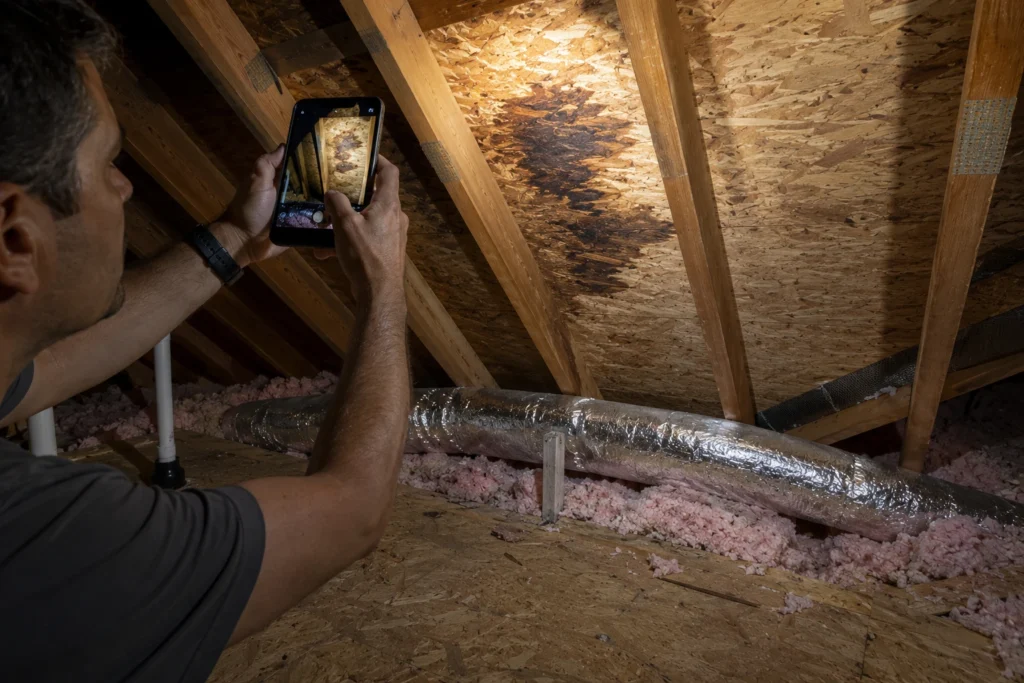
The Importance of Attic Documentation During Roof Claims
Many homeowners focus only on exterior roof damage. That is understandable. The roof surface is where hail strikes first.But attic conditions often reveal hidden problems that strengthen claims significantly.
A proper attic inspection may uncover:
- Active leaks
- Water staining
- Damp insulation
- Mold growth
- Decking discoloration
- Nail pops
- Ventilation failures
These conditions help connect exterior roof damage to interior performance issues. Take photographs inside the attic whenever safe to do so. Document moisture patterns carefully. Water stains should be photographed from multiple angles and monitored over time if they continue spreading.
Attic ventilation also matters more than many homeowners realize. Damaged vents, ridge systems, turbines, or intake ventilation components may allow moisture buildup and heat retention to worsen after a hailstorm. These secondary issues sometimes become part of supplemental claims later. That is another reason detailed inspections matter. A roof claim should evaluate the entire roofing system, not just the visible shingles from the driveway.
Why Organized Documentation Creates Negotiating Leverage
Insurance claims are negotiations whether homeowners realize it or not. The quality of your documentation directly influences the strength of your position.
Well-organized claim files create several advantages:
| Documentation Advantage | Why It Helps |
| Clear timelines | Reduces claim confusion |
| Consistent photo labeling | Simplifies inspections |
| Supporting reports | Strengthens credibility |
| Multiple inspections | Confirms scope accuracy |
| Preserved communication records | Prevents misunderstandings |
Disorganized claims often stall because too much information becomes scattered across emails, texts, handwritten notes, and incomplete estimates. Organization speeds things up. It also demonstrates seriousness. When adjusters see detailed timelines, labeled photographs, inspection summaries, and organized estimates, the claim often becomes easier to evaluate professionally. That does not guarantee approval. But it usually improves communication quality and reduces avoidable disputes.
Some homeowners even create simple digital folders organized by category:
- Roof photos
- Interior damage
- Contractor estimates
- Insurance documents
- Weather reports
- Inspection notes
- Supplemental requests
Simple systems like that can save enormous frustration later. Especially during larger claims involving multiple inspections or extended negotiations.
Why Preparation Before the Next Storm Matters
Most homeowners begin researching hail claims after damage already occurs. That is normal.
But preparation beforehand can dramatically improve future outcomes.
Waiting until after a major storm usually means making decisions under pressure. Contractors flood neighborhoods. Insurance phone lines become overwhelmed. Inspection schedules back up. Everyone suddenly wants immediate answers. Prepared homeowners handle that chaos better.
A few proactive steps can make future documentation much easier:
- Photograph your roof annually
- Save prior repair invoices
- Maintain warranty records
- Document roof age
- Store insurance policy copies digitally
- Keep contractor contact information organized
- Inspect attic areas periodically
Those records establish baseline conditions before storm damage occurs. That baseline can become extremely valuable later when disputes arise over pre-existing conditions versus fresh storm impacts. Preparation also helps homeowners identify changes faster after hail events. If you already understand your roof’s prior condition, new damage becomes easier to recognize and document accurately. That awareness creates confidence during the claim process.
Accurate documentation also becomes valuable when homeowners begin researching broader recovery strategies after severe storms. Many people searching for guidance on Hail Damage Roof Insurance Claim: How to Protect Your Roof are really trying to understand how evidence, inspections, and claim preparation work together before major financial decisions are made. Strong documentation creates a clearer path forward during that process. Another important factor during claim analysis is structural behavior under repeated weather stress. Roofing systems constantly expand, contract, and redistribute force over time much like concepts studied in continuum mechanics. While homeowners do not need engineering expertise to document hail damage effectively, understanding that roofing materials respond differently under stress helps explain why some hail impacts create hidden fractures beneath otherwise normal-looking surfaces.
Why Local Experience Matters in Lewisville Hail Claims
North Texas storms create unique roofing conditions. That matters during documentation.
North Texas Storm Patterns Create Complex Damage
Storm systems in Lewisville often involve:
- Wind-driven hail
- Rapid temperature swings
- Intense UV exposure
- Heavy seasonal rain
- Severe spring storm cycles
Those conditions accelerate roof aging over time. When hail strikes already stressed materials, damage patterns become more complicated.
Lewisville Roofs Experience Year-Round Stress
Roofing systems in Lewisville endure constant expansion and contraction.
That ongoing stress weakens:
- Seal strips
- Flashing systems
- Ventilation components
- Fastener connections
Then hail impacts the system and exposes those vulnerabilities more aggressively. Documentation becomes critical in separating storm-created damage from ordinary aging disputes.
Local Documentation Experience Helps During Disputes
Local experience helps professionals understand:
- Regional code requirements
- Municipal inspection standards
- Local labor pricing
- Common roofing systems
- Typical storm behavior
That regional familiarity can become valuable during contested claims in Lewisville.
Final Thoughts
Learning How to Document Hail Damage for an Insurance Claim before hiring contractors or filing paperwork gives homeowners a major advantage. Preparation changes outcomes.
The strongest claims usually share several traits:
- Organized timelines
- Clear photographs
- Thorough inspections
- Preserved evidence
- Detailed estimates
- Consistent documentation
Hail claims are rarely just about shingles. They involve evidence, timing, inspection quality, negotiation strategy, and documentation depth. That is why rushed inspections and incomplete photo sets often create problems later. Homeowners who understand the process early can protect themselves more effectively. They ask better questions. They recognize weak inspections faster. They maintain stronger records throughout the claim process. And most importantly, they reduce the chances of costly underpayments. In storm-heavy areas like Lewisville, preparation matters long before the next hailstorm arrives.
FAQs
You should document damage as soon as it is safe to do so because evidence can fade quickly after rain, wind, or repairs.
Wide exterior shots, mid-range roof photos, close-up impact images, and collateral damage photos are all important for supporting a claim.
Yes. Many hail impacts create hidden fractures or weakened shingles that are not visible without a closer inspection.
Yes. Preserving damaged shingles, flashing, or vents can help strengthen your insurance claim documentation.
Supplements are often needed when additional damage or code requirements are discovered after deeper inspections or roof tear-off begins.
Collateral damage refers to impacts on gutters, screens, HVAC units, soft metals, and other exterior components that help verify storm severity.
Yes. Water stains, attic moisture, and ceiling damage can help connect roof impacts to interior property issues.
Different lighting angles can reveal bruising, dents, and texture changes that may not appear in direct overhead sunlight.
No. Independent inspections and personal documentation help protect homeowners from incomplete assessments or missed damage.
Organized timelines, photos, reports, and estimates make claims easier to evaluate and reduce confusion during negotiations.